 by
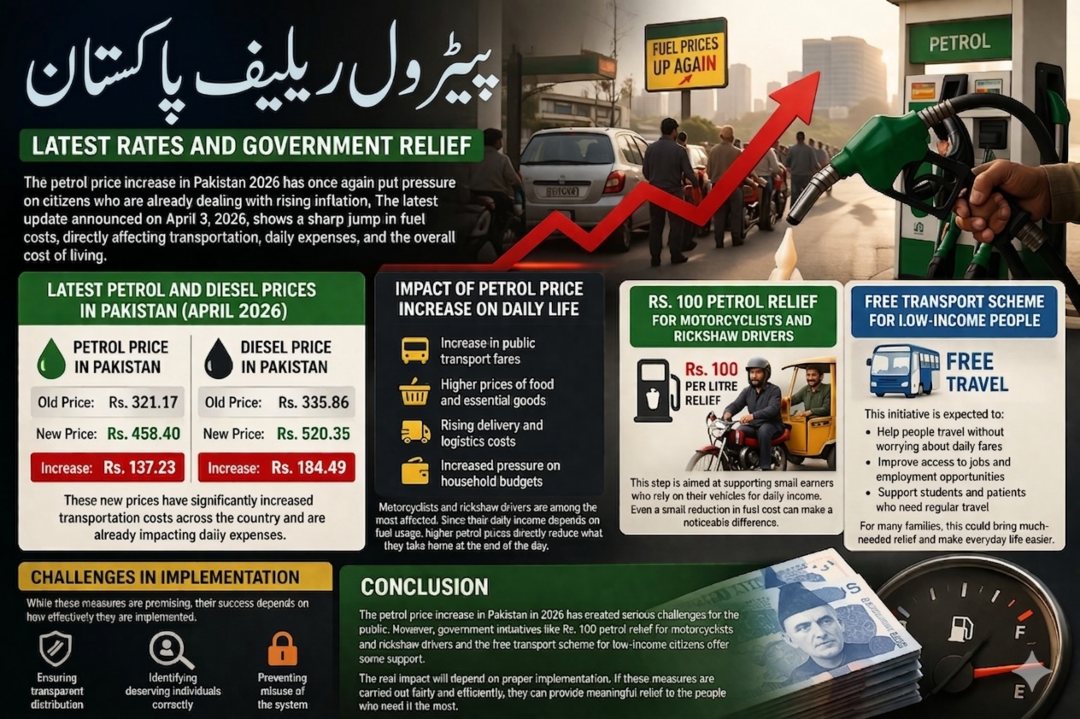
by The petrol price increase in Pakistan 2026 has once again put pressure on citizens who are already dealing with rising inflation. The latest update announced on April 3, 2026, shows a sharp jump in fuel costs, directly affecting transportation, daily expenses, and the overall cost of living.
For many households, this increase is more than just a number — it is something that will be felt in everyday life, especially for those who depend on fuel for their income.
Latest Petrol and Diesel Prices in Pakistan (April 2026)
Here are the updated fuel prices:
Petrol Price in Pakistan
- Old Price: Rs. 321.17
- New Price: Rs. 458.40
- Increase: Rs. 137.23
Diesel Price in Pakistan
- Old Price: Rs. 335.86
- New Price: Rs. 520.35
- Increase: Rs. 184.49
These new prices have significantly increased transportation costs across the country and are already impacting daily expenses.
Impact of Petrol Price Increase on Daily Life
The rise in petrol prices affects much more than just vehicle owners. It creates a chain reaction across the economy.
Some of the major impacts include:
- Increase in public transport fares
- Higher prices of food and essential goods
- Rising delivery and logistics costs
- Increased pressure on household budgets
Motorcyclists and rickshaw drivers are among the most affected. Since their daily income depends on fuel usage, higher petrol prices directly reduce what they take home at the end of the day.
Rs. 100 Petrol Relief for Motorcyclists and Rickshaw Drivers
To ease some of this burden, the government has introduced a Rs. 100 per litre petrol relief for:
- Motorcyclists
- Rickshaw drivers
This step is aimed at supporting small earners who rely on their vehicles for daily income. Even a small reduction in fuel cost can make a noticeable difference.
Free Transport Scheme for Low-Income People
Along with fuel relief, the government has also announced a free transport scheme for low-income individuals.
This initiative is expected to:
- Help people travel without worrying about daily fares
- Improve access to jobs and employment opportunities
- Support students and patients who need regular travel
For many families, this could bring much-needed relief and make everyday life easier.
Challenges in Implementation
While these measures are promising, their success depends on how effectively they are implemented.
Key challenges include:
- Ensuring transparent distribution
- Identifying deserving individuals correctly
- Preventing misuse of the system
If these issues are not handled properly, the benefits may not reach those who need them the most.
Conclusion
The petrol price increase in Pakistan in 2026 has created serious challenges for the public. However, government initiatives like Rs. 100 petrol relief for motorcyclists and rickshaw drivers and the free transport scheme for low-income citizens offer some support.
The real impact will depend on proper implementation. If these measures are carried out fairly and efficiently, they can provide meaningful relief to the people who need it the most.